
NABH-accredited eye careQuality-focused hospital systems and patient-care processes.
NABH-accredited eye care • Chhattisgarh
Looking for the Best Eye Hospital in Chhattisgarh?
Choose eye care by the strength of its specialists, diagnostics, surgical systems, safety standards and follow-up—not by a claim alone. SGVEH brings these elements together through a connected eye-care network.
Named Specialists•Advanced Diagnostics•Connected Network•Follow-up Care
2008Care journey since
8L+Patients served*
3L+Surgeries performed*
18+Districts reached*
22Vision centres*
*Institutional figures supplied by SGVEH; update before publication if current figures change.
Trust you can verify
Not just a “best hospital” claim — a care system patients can check.
SGVEH presents named clinical leadership, defined specialist roles, a connected referral network and clear patient-care pathways on its official website.
Named specialist profilesDoctor roles, clinical focus and profile pages are publicly available.
Diagnosis before treatmentExamination and appropriate diagnostics guide the next step.
Connected regional careRaipur and regional centres support referral and continuity of care.
Patient-first decision guide
“Best” should mean the right care for your eye problem.
The hospital name matters less than whether the patient reaches the right subspecialist quickly, receives appropriate diagnostics and understands the treatment plan, alternatives, expected recovery and warning signs.
Find care by eye condition →Specialist Availability
Retina, cornea, glaucoma, pediatric, squint and oculoplasty expertise when needed.
Diagnostic Depth
Measurements and imaging that support clinical decisions—not treatment by symptoms alone.
Surgical Systems
Structured pre-operative evaluation, procedure protocols and post-operative follow-up.
Patient Safety
Quality processes, infection-control practices and clear escalation pathways.
Transparent Counselling
Benefits, limitations, alternatives and follow-up explained in patient-friendly language.
Connected Referrals
A network that can refer complex cases to the appropriate higher-level centre.
Continuity of Care
Follow-up matters as much as surgery—especially in chronic retinal and glaucoma disease.
T³Team • Trust • Technology
A connected clinical pathway
From first eye check-up to advanced specialist care
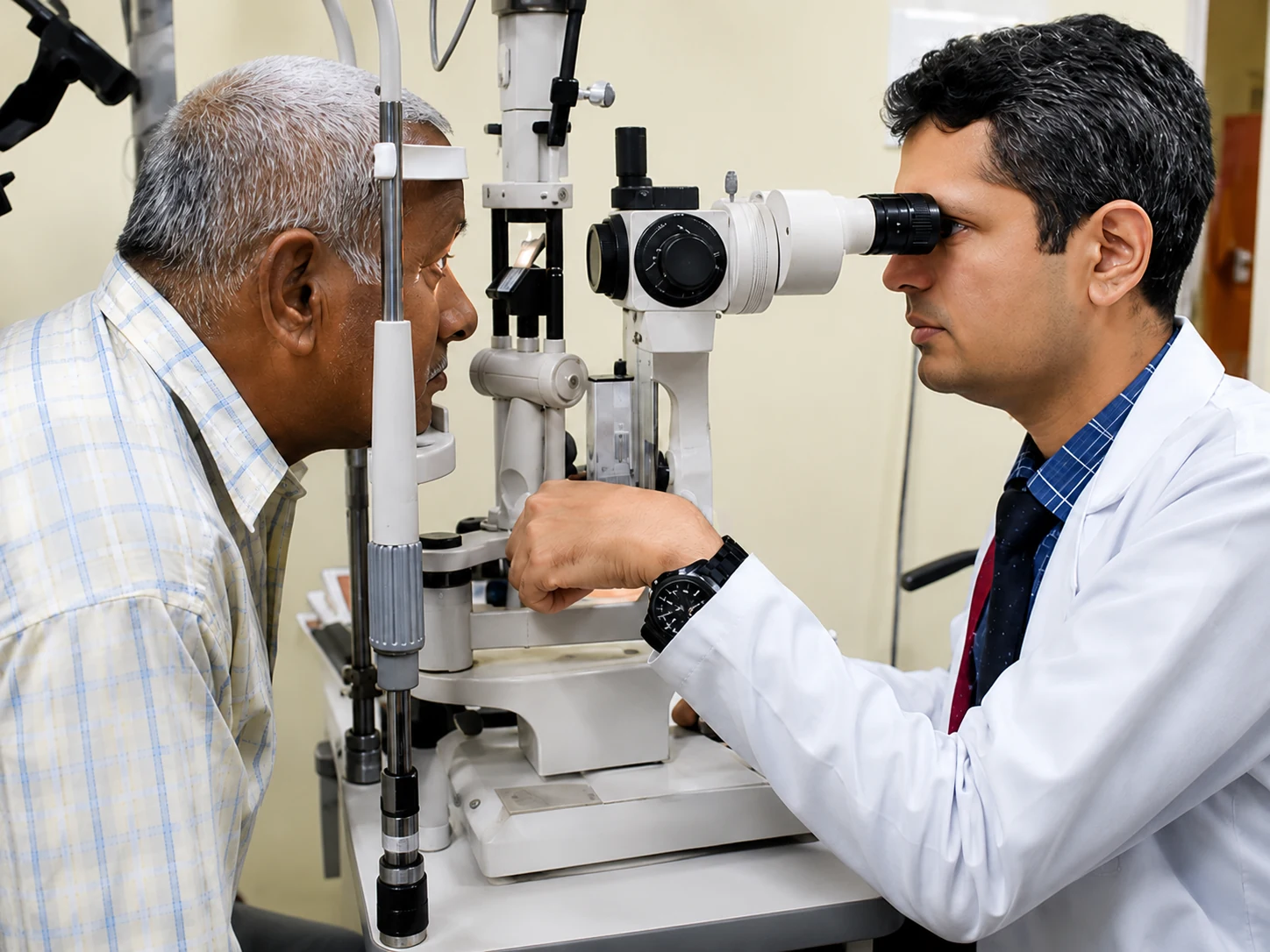
Eye symptoms can look similar even when the underlying causes are very different. SGVEH's care pathway is designed to move from history and examination to condition-specific diagnostics, specialist review and an individualised treatment plan.
1
Evaluate symptoms, vision and eye health.
2
Investigate with appropriate diagnostics when indicated.
3
Match the patient to the relevant subspecialist.
4
Treat & follow-up with clear counselling and warning signs.
Eye treatments & subspecialties
Specialist eye care for common and complex conditions
Explore care by condition. Each service should link to its own dedicated, medically reviewed treatment page when this landing page is integrated into the main SGVEH website.
Cataract & Phaco
Cataract evaluation, biometry, phacoemulsification and personalised intraocular-lens planning.
Cataract care →Retina
Diabetic retinopathy, retinal detachment, macular disease, retinal imaging, lasers and surgery.
Retina care →Glaucoma
Eye-pressure evaluation, field testing, optic-nerve assessment, medical and surgical management.
Glaucoma care →Cornea
Keratoconus, corneal infection, dry-eye related assessment and advanced corneal care pathways.
Cornea care →Squint
Evaluation of childhood and adult squint, binocular vision, visual development and surgical options.
Squint care →Pediatric Eye Care
Child-friendly evaluation for refractive errors, lazy eye, squint and other pediatric eye conditions.
Child eye care →Oculoplasty & Orbit
Ptosis, eyelid, lacrimal, orbital and reconstructive eye-care evaluation and treatment.
Oculoplasty →Comprehensive Eye Care
Routine eye examination, refractive assessment and referrals for condition-specific specialist care.
Eye check-up →
Clinical leadership you can verify
Meet the four SGVEH doctors featured on this page
Each card links to the doctor’s official SGVEH clinical profile so patients can review the role and defined clinical focus before choosing care.

Medical Director
Dr. Charudutt Kalamkar
MBBS, MS (AIIMS New Delhi)
Cataract • Refractive Care • Glaucoma • Neuro-OphthalmologyView verified profile →
Director — Holistic & Community Ophthalmology
Dr. Anil Gupta
Ophthalmologist
Holistic Eye Care • Community Ophthalmology • Institutional DirectionView verified profile →
Director — Cornea Services
Dr. Amrita Mukherjee
MBBS, DOMS • Advanced Cornea Training
Cornea • Keratoconus • Ocular Surface • Corneal TransplantView verified profile →
Director — Strategic Leadership & Eye Care
Dr. Vinay Jaiswal
Ophthalmologist
Strategic Leadership • Hospital Systems • Comprehensive Eye CareView verified profile →Why this builds trust: patients can see who leads care, what each doctor’s defined role is, and open the official SGVEH profile instead of relying on an anonymous marketing claim.
Technology with clinical judgement
Diagnostics should answer a clinical question.
Advanced equipment is valuable when it improves measurement, diagnosis, surgical planning or follow-up. At SGVEH, technology is positioned as a support to specialist decision-making—not a substitute for it.
AI + Human Intelligence
Meta Vision AI Lab
A connected diagnostic environment for imaging, measurements and clinical correlation across major eye specialties.
- Condition-specific imaging
- Pre-operative planning support
- Objective follow-up comparisons
- Specialist interpretation
Do not delay
Some eye symptoms need urgent assessment.
- Sudden loss or marked blurring of vision
- New flashes, many floaters or curtain-like shadow
- Severe eye pain, redness with reduced vision
- Eye injury or chemical exposure
- Sudden double vision or neurological symptoms
Regional eye-care network
Eye care closer to patients across Chhattisgarh
Local centres support consultation, diagnostics and follow-up, with referral to higher-level care when a condition requires additional subspecialty or surgical support.
Raipur
Comprehensive multi-specialty ophthalmology, advanced diagnostics and surgical services.
Explore Raipur →Korba
Local ophthalmic care with connected referral support.
Explore Korba Branch →Champa
Eye consultation, treatment pathways and network referrals.
Explore Champa Branch →Manendragarh
Regional access to SGVEH eye-care services and referrals.
Explore Manendragarh Branch →Popular patient questions
Helpful answers before your visit
These question-led pages are designed for patient understanding and can become the AEO / long-tail content hub around this main Chhattisgarh landing page.
Frequently asked questions
Eye hospital & treatment FAQs
How do I choose the best eye hospital in Chhattisgarh?
Look for specialist availability, comprehensive diagnostics, surgical infrastructure, patient-safety systems, transparent counselling, emergency referral capability and reliable follow-up. The right hospital should match the patient's specific condition with the appropriate specialist and technology.
Which eye problems are treated at SGVEH?
SGVEH provides care across cataract, retina, glaucoma, cornea, squint, pediatric ophthalmology, oculoplasty and comprehensive eye care, supported by diagnostic and surgical services.
When should sudden blurred vision be treated as urgent?
Sudden loss or marked blurring of vision, flashes with new floaters, a curtain-like shadow, severe eye pain, eye injury or sudden double vision can require urgent assessment. Seek prompt ophthalmic evaluation rather than self-treating with eye drops.
Can adults be treated for squint?
Yes. Adult squint can often be evaluated and treated depending on its cause, duration, eye movements, vision and overall health. Treatment may include glasses, prisms, selected exercises or surgery after specialist assessment.
Does every cataract patient need the same lens?
No. Lens selection depends on eye measurements, retinal and corneal health, visual needs, lifestyle, occupation and medical suitability. Cataract evaluation and biometry help guide the choice.
Can a patient from Korba, Champa or Manendragarh be referred to Raipur?
Yes. A connected network can support local assessment and follow-up while referring selected cases to a higher-level centre when additional subspecialty, diagnostics or surgical services are required.
Medical content standard
Designed for trustworthy health information
This page is patient education, not a diagnosis. Treatment decisions require an in-person eye examination and appropriate diagnostics. Doctor roles shown above are linked to the official SGVEH clinical profiles for transparency.
Clinical transparencyNamed doctors • Defined roles • Direct profile linksPage updated: 18 August 2026
Need an eye consultation?
Tell us what problem you are facing.
Our team can help guide you to the appropriate SGVEH location or specialist pathway.